
 BIP
BIP
We don't need to be Houston to reach the stars. Wroclaw is already making its mark on the cosmos!

The location of the European Space Agency’s Technology Centre in Wrocław would be a major opportunity for the city and the region. We also have the support of our neighbors—not only from the Opole region, but also from German and Czech regions. Dnipropetrovsk has also joined the group of allies, offering its scientific and industrial base.
The European Space Agency (ESA) has already decided that its Technology Centre will be located in Poland. What remains crucial now is which city will host it.
Wrocław has unmatched potential
Wrocław is not the only city that believes it is the best location. Kraków, Gdańsk, Łódź, and the Upper Silesian-Zagłębie Metropolis share the same ambition. Warsaw is also increasingly being mentioned.
On Thursday, March 26, local government officials, scientists, and business representatives gathered in the session hall of Wrocław City Hall to summarize the city’s efforts so far and continue lobbying until a final decision is made. It is not yet known when that decision will be announced, though it is expected within the first half of the year.
“We are fighting for a vision not only for Wrocław, Lower Silesia, and Poland. This is a broader, supra-regional partnership. We have managed to gather many supportive voices and practical insights. Thanks to the initiative of the Marshal of Lower Silesia, Paweł Gancarz, our friends from Dnipropetrovsk have joined us” said Jakub Mazur, Deputy Mayor of Wrocław.
“We already know that no one in Poland has the potential we do. Wrocław and Lower Silesia are the best place to establish ESA’s Technology Centre” he added.
Wrocław backed by Dnipropetrovsk
“The creation of the Centre would confirm and strengthen the position of Wrocław and the region. I eagerly await the announcement of the results—namely, Wrocław as the chosen location” wrote Marshal Paweł Gancarz in a letter to participants.
"Lower Silesia and the Dnipropetrovsk region share 20 years of cooperation. When the question of the Centre’s location arose, there was no doubt it should be Wrocław. The Dnipropetrovsk region is interested in joint activities with Wrocław in ESA-related projects" said Mykola Lukashuk, Head of the Dnipropetrovsk Regional Council.
Wrocław’s candidacy is supported by the Dnipropetrovsk region, its university, and the Yuzhmash industrial group, which has experience in rocket systems production.
A Wrocław company on the ISS
Wrocław’s strengths also include scientific achievements and cooperation with ESA. During a space mission, Poland’s second astronaut, Sławosz Uznański-Wiśniewski, took a small device created in Wrocław aboard the International Space Station (ISS).
It may have looked inconspicuous, but it was a serious experiment.
“We were one of 13 selected experiments. Its goal was to examine how algae behave in space,” explains Wiktoria Dziaduła from the Wrocław-based company Extremo Technologies. “We are designing an innovative life-support system for future space missions. For long missions, you cannot take everything with you—you need to produce resources in space. We developed a micro-laboratory to study oxygen production. Our assumptions were confirmed: algae adapt well to space conditions.”

“For us, as a company based in Wrocław, it is important that the Centre is established here,” she adds.
Companies like Extremo Technologies help create an ecosystem favorable to ESA.
Weronika Urbańska from Extremo Technologies adds: “We have enormous potential. We are becoming increasingly recognized within ESA structures.”
“Such a Centre will attract talent from other regions to Wrocław. We have a chance not to suffer from brain drain, but to reverse it,” notes Professor Paweł Rudawy from the University of Wrocław.
Wrocław has brains and energy
“If ESA were making the decision independently, we would already have this Centre. Our companies and universities are well known there,” says Professor Witold Rohm from the University of Environmental and Life Sciences.
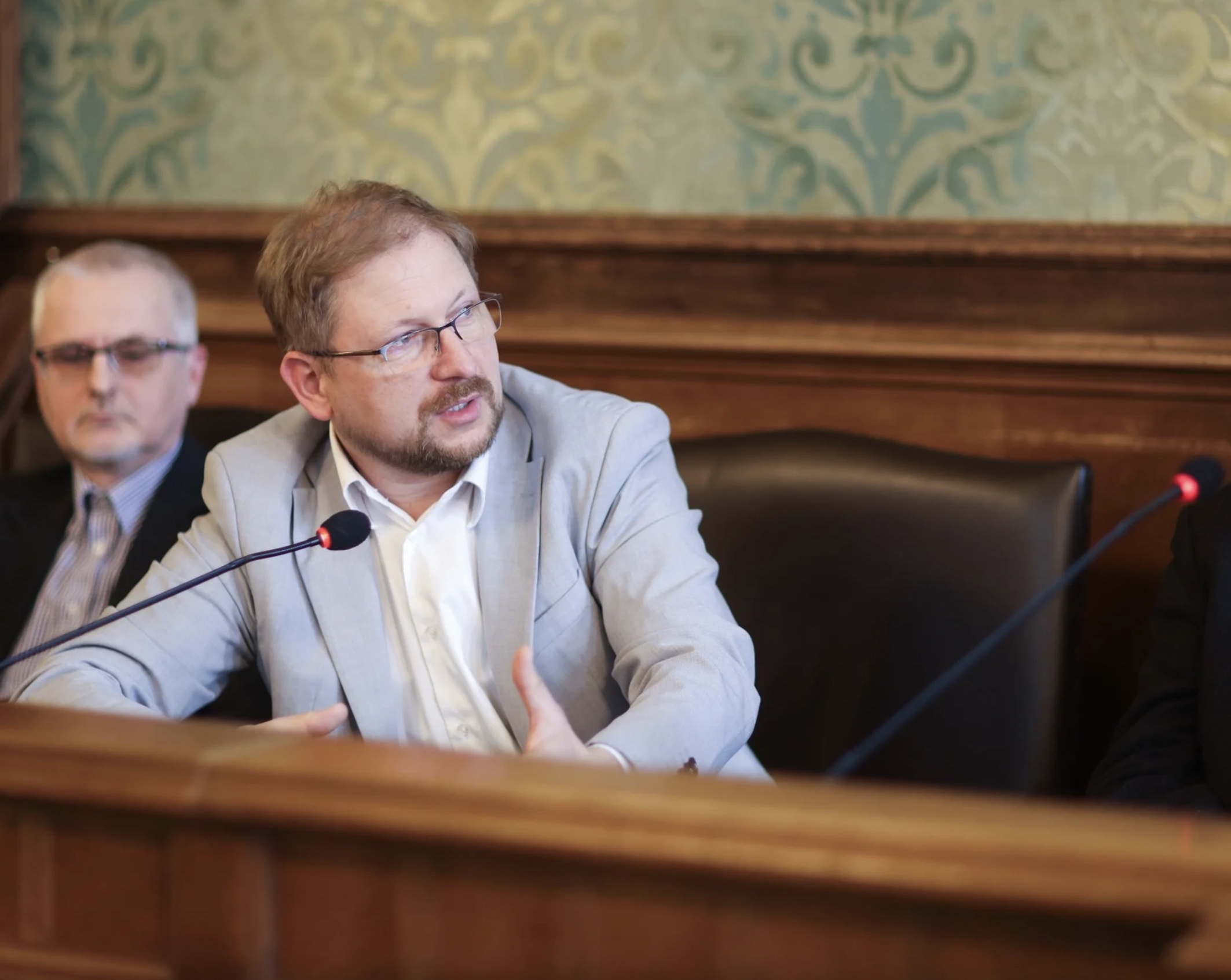
Paweł Kurant from the Łukasiewicz Research Network – PORT divides the arguments in favor of Wrocław into objective ones—such as good location, a strong academic hub, and cross-border cooperation—and subjective ones.
“There is an incredible energy around this idea. The scientific community, local government, and business are speaking with one voice. This positive momentum will be noticed in Warsaw” he says.
What will the ESA Technology Centre do?
- Space safety
Monitoring orbital threats (such as space debris), protecting satellites from collisions, and forecasting space weather that can affect electronics on Earth. - Dual-use technologies
Developing technologies for both civilian and military applications (e.g., secure satellite communications, Earth observation). - Industry support
Helping Polish companies secure ESA contracts. - Technology testing
Providing access to advanced infrastructure previously unavailable to Polish companies.
A wide group of scientists, entrepreneurs, local officials, and regional authorities—together with partners from Germany and the Czech Republic—have already jointly appealed for locating the Centre in Wrocław, led by the city’s authorities.
An appeal has also been issued by members of the Wrocław City Council and the Lower Silesian Regional Assembly.