
 BIP
BIP
Fresenius Kabi investing in the Wroclaw metropolitan area [INTERVIEW]

Over 550 years of tradition! It all began with a pharmacy founded in 1462 in Frankfurt am Main—now, in Poland and across Europe, they’re introducing new technologies in healthcare and have strong ties to the Wrocław metropolitan area. In an interview with Jarek Ratajczak, Joerg Pluskwik and Aleksandra Jeschke-Bassong discuss what Fresenius Kabi is doing in Wrocław and the region.
Joerg Pluskwik, General Manager of the Clinico Medical Fresenius Kabi medical device plant in Błonie. Aleksandra Jeschke-Bassong, Vice President of Global Operations and Managing Director of Fresenius Kabi Business Services in Wrocław.
- 1999: Fresenius Kabi establishes a company in Warsaw.
- 2000: They acquire an infusion fluid manufacturing plant in Kutno.
- 2005: They invest in a factory in Błonie near Wrocław.
- In 2014, they opened a finance and accounting center and an IT company in Wrocław.
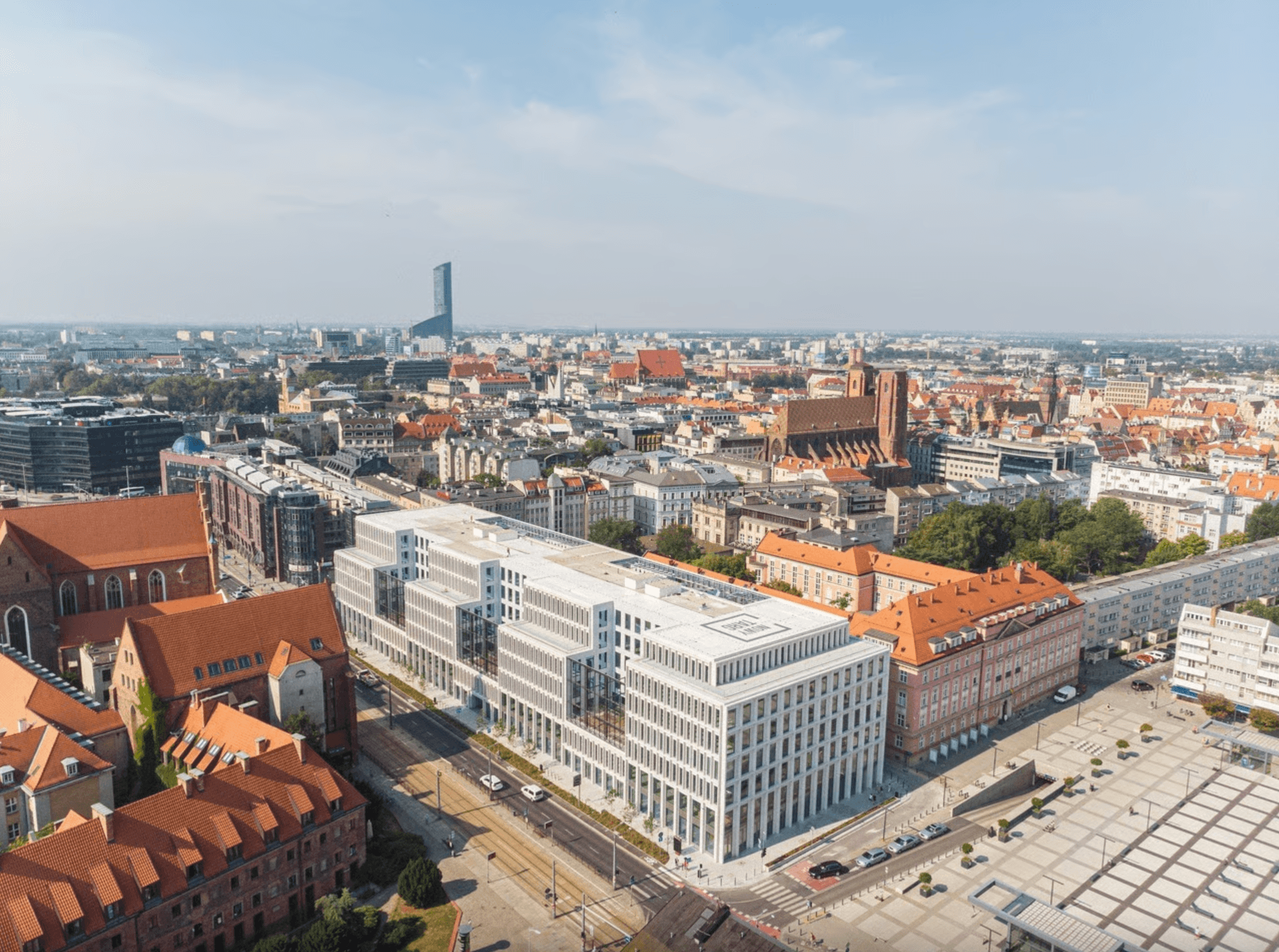
The heart of the Fresenius Group, to which Fresenius Kabi belongs, beats in Germany, in Bad Homburg, near Frankfurt. You’ve been in Lower Silesia since 2005. What are you doing in the Wrocław metropolitan area?
Joerg Pluskwik: Fresenius Kabi has been in Lower Silesia for many years, and we are deeply rooted here. First, a medical devices factory was established in Błonie, in the municipality of Miękinia. The company was registered in 1994 (the plant was established in 1996 and has been part of the Fresenius Kabi Group since 2005).
Aleksandra Jeschke-Bassong: In 2014, an accounting and financial services center was established in Wrocław—Fresenius Kabi Business Services. We have employees here who worked in Błonie when the factory did not yet belong to the Fresenius Group and who later moved to Wrocław.
We also have a technology and IT company in Wrocław—Fresenius Digital Technology—which was founded in 2014. On a daily basis, the company’s employees manage the entire IT infrastructure, administration, cybersecurity, and technological transformation. The Polish branch is the largest of all foreign units, as the headquarters is located in Bad Homburg, Germany.
The company chose Wrocław because of its location—in the heart of Europe, close to major transportation routes. Access to a skilled workforce was also a key factor. And besides—Wrocław is simply a beautiful city!
Fresenius Kabi: State-of-the-Art Technologies
What do you do in Błonie near Wrocław?
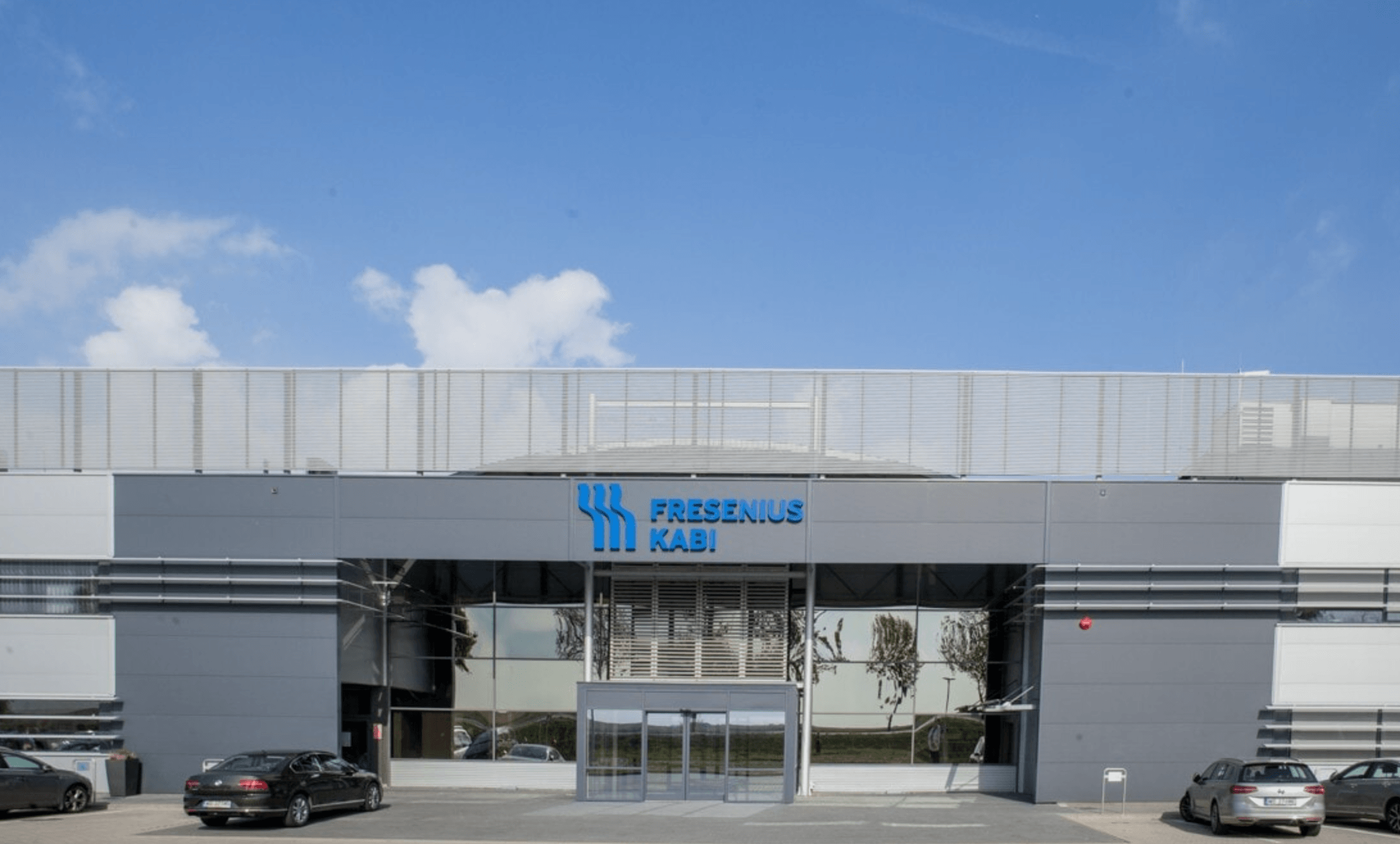
JP: We manufacture single-use medical devices for the administration of medicinal products. Another important area is blood donation and blood therapy—we produce infusion and blood transfusion sets here. Through these activities, we support healthcare systems: we supply hospitals with essential equipment, ensuring access to blood and blood components in Poland and abroad. Fresenius Kabi is known for its medical nutrition offerings—in Błonie, we manufacture sets for enteral feeding and, more broadly, for foods for special medical purposes.
How is the plant developing, and where are you investing?
JP: The plant has undergone many changes recently. Last August, we launched a new production line for devices used in blood donation and blood therapy. We closely monitor trends and scientific advances, and we hold all necessary certifications to ensure that our products are high-quality and safe.
How important is the Błonie facility to the entire Fresenius Group?
JP: It is the second-largest medical device facility at Fresenius Kabi. It has been growing rapidly from the very beginning and holds certifications that allow it to export to nearly all global markets. It is equipped with modern machinery, enabling it to supply customers with products that meet the highest quality standards. All of these activities are aimed at delivering reliable and innovative products. As a result, patients and the healthcare system benefit—this is a true embodiment of our mission, “Committed to life.”
Fresenius Kabi: New Jobs and Investments in Wrocław
Fresenius Kabi has a finance and accounting center in Wrocław. What do you do there?
AJB: The center handles accounting and financial operations for 21 markets, including, of course, the other Fresenius Kabi units in Poland.
Our main task is to support other company units in financial, accounting, and operational processes, which includes, among other things, reconciling and reporting financial data, managing fixed assets, processing payables and receivables, maintaining supplier accounts, and settling business travel expenses. We carry out key back-office processes, ensuring consistency, quality, and standardization of financial operations across Europe.
In addition, the center is responsible for master data management, supporting indirect procurement, and activities related to continuous process improvement and ensuring the highest possible quality.
How many people do you employ in Błonie and Wrocław, and are you currently hiring?
AJB: We have 1,000 employees in Błonie and about 400 in Wrocław. We’re recruiting for a wide variety of positions—in production and services—most often in accounting, but also in procurement and global projects. We’re also looking for employees for analytical roles.
We invite everyone who wants to grow with us to come in for an interview. We have experience working in an international environment. We’re a diverse group of nationalities, and that’s our strength.
Is Fresenius Kabi in Poland limited to Lower Silesia?
JP: For example, we invite you to Kutno, to our infusion solution manufacturing plant. Over 25 years ago, Fresenius Kabi acquired this facility from Polfa Kutno—and since then, it has undergone an incredible transformation. In Kutno, we produce infusion solutions, which are essential in every hospital, as well as antibiotics and anesthetics.
AJB: In Warsaw, we have a sales and marketing office as well as numerous support functions.
Fresenius: It all began 550 years ago with a pharmacy
What is the history of the Fresenius company?
JP: We’re proud that Fresenius Kabi has over 550 years of tradition! It all began with a pharmacy founded in 1462 in Frankfurt am Main—a dozen or so years before Christopher Columbus’s voyage and the discovery of America. Perhaps that pharmacy was also a place of exploration—not in search of India, but of substances that could cure diseases.
In the early 20th century, Eduard Fresenius transformed the pharmacy into a company producing infusion solutions and medications. The company then grew; a production facility was built in Bad Homburg, and the development of medical technologies and medical devices began. In 1999, Fresenius merged with Kabi/Pharmacia & Upjohn, and since then, as Fresenius Kabi, the company has been one of the global leaders in the fields of infusion therapy, intravenous medications, clinical nutrition, and transfusion technologies.
AJB: So the company has transformed from a small family-run pharmacy into a large corporation. We have over 50 production facilities and employ 41,000 people worldwide.