BIP
BIP
In Wroclaw, you can get an education for the space industry

Today, the space industry is much more than just rockets and orbital flights. It needs specialists in satellite data analysis, artificial intelligence, automation, electronics, geoinformatics, and the design of modern systems. You can also acquire these skills in Wrocław. We’re taking a look at which degree programs prepare students for careers in one of the fastest-growing sectors of the modern economy.
The space sector is growing much faster than one might think. It’s no longer just about building rockets and orbital flights, but also satellite data analysis, artificial intelligence, the design of navigation systems, and technologies used in industry and environmental protection. There are several universities in Wrocław that prepare students for careers in precisely these areas.
Space Is More Than Just Rockets
Although the space sector is primarily associated with spaceflight, data is at the heart of its day-to-day operations. Thousands of satellites orbiting Earth provide information used for climate monitoring, transportation planning, urban management, precision agriculture, and the operation of navigation systems. Artificial intelligence is also playing an increasingly important role, helping to analyze vast sets of satellite data. Thanks to this data, digital twins of cities, smart traffic management systems, and solutions supporting environmental protection are being developed.
A New Program at the University of Life Sciences
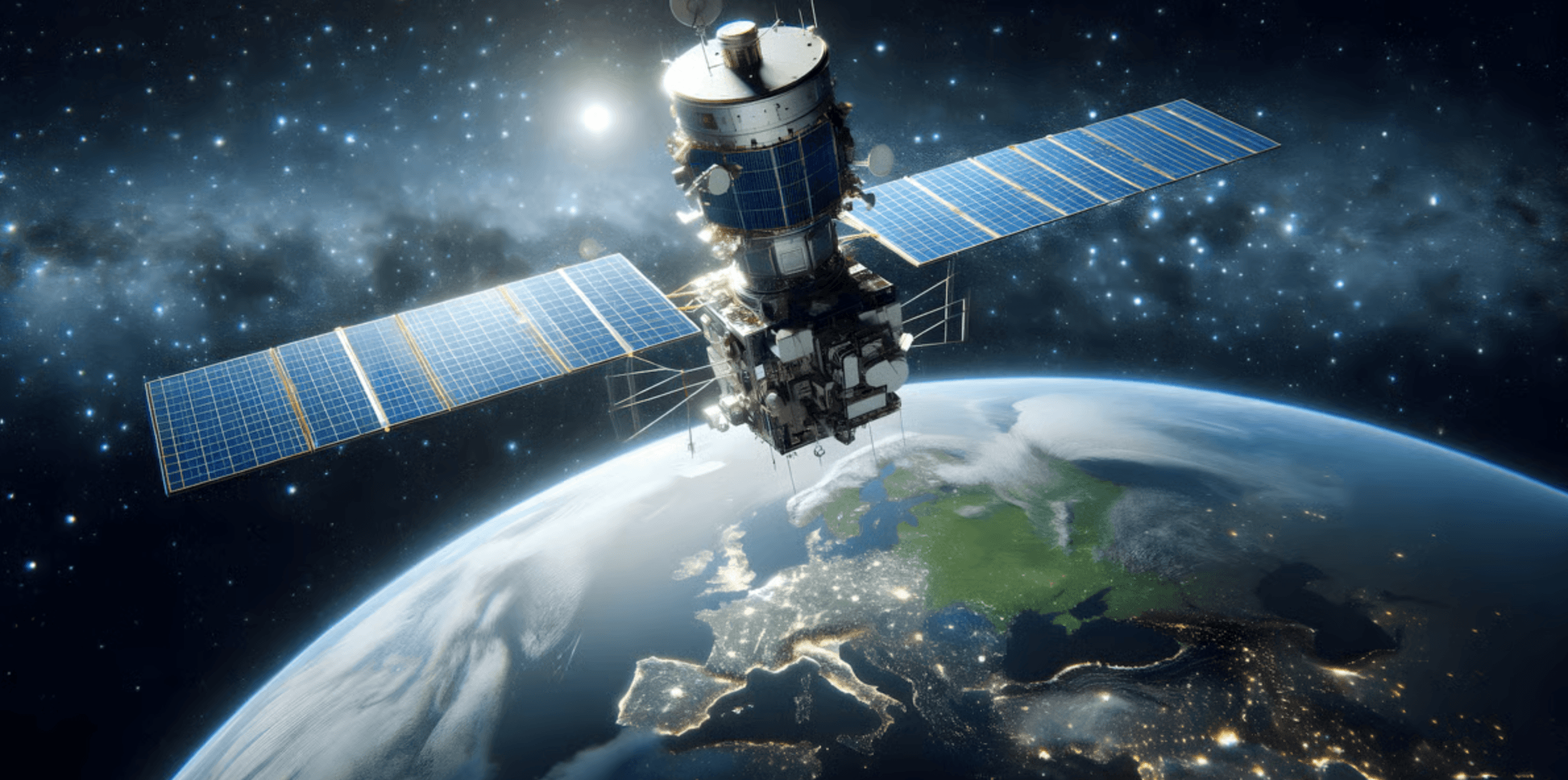
The University of Life Sciences in Wrocław is responding to these needs. At the Faculty of Environmental Engineering and Geodesy, in collaboration with companies from the space sector, the Satellite and Space Data Engineering program was launched in 2025, combining programming, data analysis, artificial intelligence, and satellite technologies. Starting in their first year, students plan their own space missions under the guidance of industry guests, and in subsequent years, they delve into the intricacies of remote sensing, signal analysis, and interplanetary data processing. Graduates—data analysis specialists—will be prepared to work both in the space sector and in the broader geospatial data industry, covering not only data from Earth but also from the Moon and other planets.
The second program is Geodesy and Cartography, which showcases the modern face of the geodesist’s profession. Students learn, among other things, geoinformatics, the use of drones, LiDAR laser scanning, and the creation of digital models and digital twins of cities—skills that can also be useful in the space industry. Graduates of the Geodesy and Cartography program at the Wrocław University of Environmental and Life Sciences have for years been contributing to the creation of satellite and aerial imagery of Earth, determining the orbital parameters of launched satellites, and analyzing the data collected by them.
The Wrocław University of Science and Technology Focuses on Aviation and Astronautics
Anyone interested in designing rockets, satellites, or systems used in space missions can choose the Aviation and Astronautics program at the Faculty of Mechanical Engineering and Energy at the Wrocław University of Science and Technology.
Those interested in studies that prepare them for a career in the space industry will find several opportunities for development at our university, both within our degree programs and through project work, research, and student activities.
Michał Ciepielski from Wrocław University of Science and Technology
Already during their bachelor’s studies, students gain knowledge in areas related to aviation and space technologies. The curriculum includes, among others, courses such as “Elements of Space Technology”, which serve as an introduction to the subject, and “Aviation Propulsion”, in which part of the coursework is devoted to rocket propulsion.
In the master’s program, students can choose one of two thematic tracks: unmanned aerial vehicles or space engineering. The curriculum includes, among other things, courses on the fundamentals of vibration theory, analytical mechanics, artificial intelligence, space mission planning, navigation and control of artificial satellites, rocket design, and celestial mechanics.
Aircraft are part of their everyday lives
For over 20 years, the Faculty of Mechanical and Energy Engineering at the Wrocław University of Science and Technology has been training engineers specializing in the maintenance, operation, and servicing of aircraft.
Our graduates work at many companies in the aviation industry, including XEOS, an aircraft engine maintenance center that is a joint venture between Lufthansa Technik and GE Aviation, at the Wrocław branch of Collins Aerospace, which manufactures fuel and control systems for aircraft engines as well as hydraulic components for flight control and management in airplanes and helicopters; and at WAMS (Wrocław Aircraft Maintenance Systems), the Polish maintenance base for Ryanair aircraft.
Michał Ciepielski
College is just the beginning
At the Wrocław University of Science and Technology, participation in research clubs is an important part of the educational experience.
Starting in their first year, students are encouraged to get involved in projects related to aviation, space exploration, and modern engineering technologies.
Michał Ciepielski
The Faculty of Mechanical and Energy Engineering is home to the Academic Aviation Club, which has been designing and building unmanned aerial vehicles for many years and then competing with them in international student competitions, including in the U.S., Australia, and Germany.
Students interested in space can also join other active research clubs. Among them are PWr in Space, whose members build rockets; the Off-Road Research Club, known for building the Scorpio Mars rover; and PWr Aerospace, which focuses on designing space probes, among other things.
Wide-ranging opportunities to gain space-related knowledge
Projects related to space technologies are also being carried out at other faculties of the Wrocław University of Science and Technology. The Faculty of Mechanical Engineering is conducting research on metal 3D printing technology, which could enable, among other things, the production of replacement parts in orbit.
Scientists from the Faculty of Environmental Engineering have developed, under laboratory conditions, a technology for extracting water from lunar regolith, which could be of significant importance for future exploration of the Solar System.
Meanwhile, researchers from the Faculty of Electronics, Photonics, and Microsystems have developed an analytical instrument for studying the composition of the gaseous atmosphere.
Where in Wrocław can you study with a focus on the space industry?
Wrocław University of Environmental and Life Sciences
- Satellite and Space Data Engineering,
- Geodesy and Cartography.
Wrocław University of Science and Technology
- Aeronautics and Astronautics (bachelor’s and master’s programs),
- with opportunities to gain experience in research clubs working on rocket, satellite, and space projects.
Although the path to a career in the space sector can lead through various specializations, one thing is certain—the modern industry needs more than just astronauts and rocket engineers. Equally important are specialists in data science, programming, automation, electronics, and geoinformatics. Universities in Wrocław are already training professionals who will develop technologies used both on Earth and beyond its atmosphere.