
 BIP
BIP
Science, economy, security. Will an AI gigafactory be built in Wroclaw?

Will Wrocław become one of the most important centers of artificial intelligence in Europe? During a conference at the Wrocław University of Science and Technology, representatives of the government, local government, and science debated the construction of an AI gigafactory in our city.
On Friday (January 16), Wrocław University of Science and Technology hosted a scientific conference entitled “Baltic AI Gigafactory in Wrocław – Science, Economy, Security,” attended by:
- Agnieszka Dziemianowicz-Bąk, Minister of Family, Labor, and Social Policy,
- Dariusz Standerski, Deputy Minister of Digital Affairs,
- Anna Sobolak, Member of the Polish Parliament, member of the Committee on Digital Affairs, Innovation, and Modern Technologies,
- Michał Rado, Deputy Marshal of the Lower Silesian Province,
- Dr. Piotr Kozdrowicki, Deputy Governor of Lower Silesia,
- Jakub Mazur, Deputy Mayor of Wrocław
- and Prof. Arkadiusz Wójs, Rector of the Wrocław University of Science and Technology.
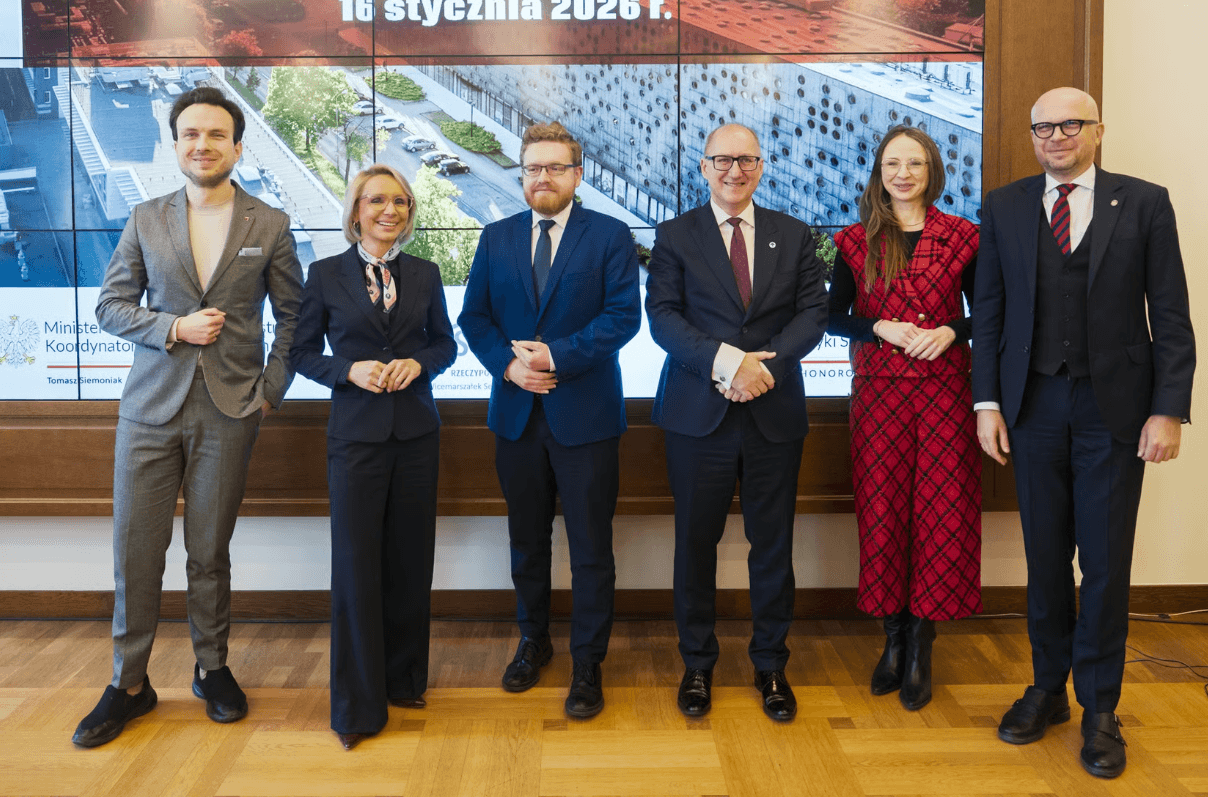
It is clear that the commitment to building an AI gigafactory in Wrocław comes from many sides: local government, business, science, but also the military. Representatives of various communities have clearly shown that our city is a suitable and safe location for this investment.
Anna Sobolak, Member of Parliament and co-organizer of the event at WUT
– Today, an important conference was held at Wrocław University of Science and Technology on the construction of an AI gigafactory – a project that will allow our city to become one of the most important centers of artificial intelligence in Europe. We are talking about a strategic investment that combines security, technological development, and, above all, enormous economic potential, emphasized Jakub Mazur, Deputy Mayor of Wrocław.
“I would like to thank everyone gathered here for their commitment to this project and their excellent cooperation,” added the Deputy Mayor.
GigaFabryka AI may be built in Wrocław
During the conference, issues were discussed that point to Wrocław as a strategically safe location for the construction of GigaFabryka AI and emphasize the importance of the Wrocław University of Science and Technology in the development of the global AI ecosystem.
This event shows how well-developed the artificial intelligence ecosystem is in Wrocław. Together with Minister Agnieszka Dziemianowicz-Bąk, we saw how well this cooperation is going, and we saw specific projects and solutions. This is proof of the readiness of the city and the university to implement this investment.
Dariusz Standerski, Deputy Minister of Digital Affairs
Wrocław University of Science and Technology is seeking to build an AI gigafactory, which would be located on the campus at Długa Street. In November 2025, the city and regional authorities expressed their support for this investment, emphasizing its importance for the development of modern technologies.
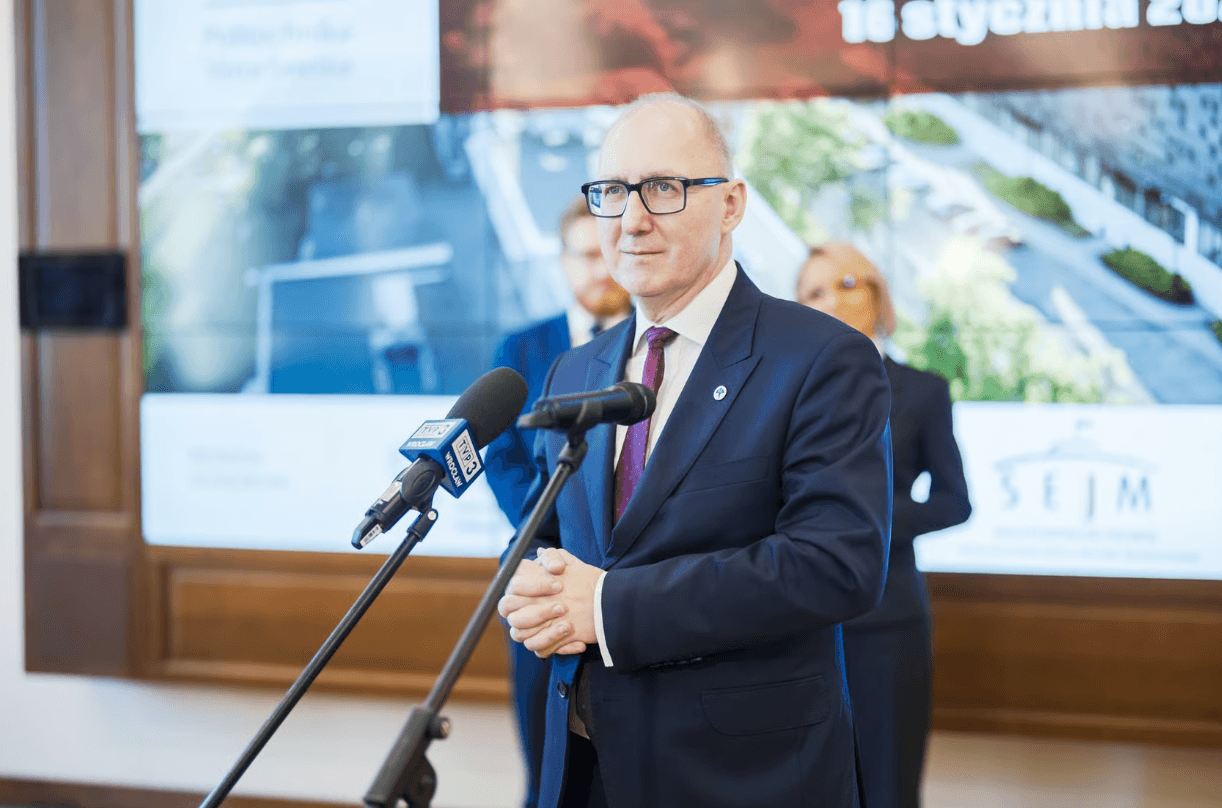
Without AI, it is impossible to ensure national security, pursue science, and explore the world. That is why it is extremely important for Poland and Europe to remain competitive in the field of infrastructure. Today, we focused on presenting arguments, together with our partners, that choosing Wrocław would be a very good decision.
Prof. Arkadiusz Wójs, Rector of WUT
The European Commission has changed the rules of the competition
The concept of expanding artificial intelligence infrastructure in Europe was first presented in February this year at the AI Summit in Paris. It involves the construction of AI GigaFactories (AIGF) based on the world-class European supercomputer network EuroHPC.
These are to be large-scale AI computing infrastructure facilities designed to create, train, and deploy very large AI models and applications on an unprecedented scale (e.g., AI models with hundreds of trillions of parameters).
The change in the rules of the competition recently announced by the European Commission may prove to be a problem. Originally, member states were to participate in the competition together with consortia, i.e., interested business and scientific organizations.
What exactly is going on?
In June 2025, Poland, together with Lithuania, Latvia, and Estonia, as well as companies and scientific institutions from these countries, created the Baltic AI GigaFactory consortium. In July last year, the European Commission approved the application. Later, the Czech Republic also joined the project.
In December 2025, however, the Commission announced a change in the rules and a European tender for the construction of gigafactories is planned, from which big tech companies will not be excluded. Following this decision, Estonia and Latvia withdrew from the project. In the event of a European tender, the price and technical conditions would be taken into account, and the role of the states would be limited to guaranteeing a contribution of approximately €500 million, without any influence on where, by whom, and how the gigafactories would be built.
Today, I can officially announce the formation of a coalition to strengthen efforts to build AI gigafactories. In addition to Poland, the coalition includes France, Germany, the Czech Republic, Lithuania, Spain, Sweden, Denmark, Austria, and the Netherlands. We have set ourselves a clear goal to make AI gigafactories in the European Union a project that will open a new chapter in cooperation between the state and business. Together, we want to make another adjustment and return to the assumption that guided us all in June.
Dariusz Standerski, Deputy Minister of Digital Affairs
– Poland, and as we can see many countries, does not agree with all the points of the December proposal. Therefore, today we are putting forward solutions that increase the participation of countries and also protect the interests of companies operating in the European Union, added the deputy minister.
What are AI gigafactories?
Artificial intelligence gigafactories are to be large-scale computing infrastructure facilities designed to create, train, and deploy very large AI models and applications on an unprecedented scale.
The Baltic AI GigaFactory project involves the construction of up to two artificial intelligence gigafactories in our country. Thanks to the Wrocław University of Science and Technology, one such facility has the chance to be built in Wrocław, on the university campus on Długa Street.
The Ministry of Digital Affairs has already conducted a preliminary selection of proposals for the location of factories in Poland. Five applications have been selected for further analysis, including the proposal submitted by Wrocław University of Science and Technology. The decision on the location will be made by the European Commission.